Wednesday, August 18, 2010
Two Opinions on Effective Radio Campaigns
I found this article Radio Advertising Works With These Tips! posted by Tyrell MacGregor in 2008 on Digg. I've added my own tips in italics below his.
Advertising on the radio can be an effective lead generation strategy. But like all marketing tactics, success or failure lies in its implementation. Here are 15 important tips to help make your radio advertising more profitable.
1. Make sure you match the station to your intended target market. For instance, if most of your projects are sold to an affluent middle-aged clientele, it''s best to advertise on a station who''s audience is comprised of this same demographic. To pick the right radio station, poll your best clients and ask them what station(s) they listen to. If you begin to see a consistent station pop up in your survey, there''s a good chance that you''ll find more clients amongst that station''s listeners.
I completely agree that its important to fish where the fish are. If your business is flourishing with the perfect client, then great, ask your best clients not just about the radio stations they listen to, but what media platforms they use to shop.
However, there are lots of reasons to not poll your existing best clients. What if your goal was to sell more high value products/services? What if your goal was to lower the age of your average client? The great part about radio is that you can select specific target groups to initiate conversation with.
2. Use a first sentence that grabs the listener and demands attention, preferably by leading with a benefit or asking a curiosity-provoking question. Example: Would you like to have the nicest home in your neighborhood?
Grabbing attention is important, but lets call a spade a spade. Advertising in most forms is an invasion of a consumer's 5 senses. Who wouldn't like the nicest home in your neighborhood?
My advice? Be real. I think honesty will grab consumers attention more than any gimmicky line. Take a look at the most popular shows on TV...Amercian Idol, So you think you can Dance, Bachlorette...all reality shows. What about online? On Youtube, there are lots of 'kids' out there with over 1 million viewers per week just broadcasting from their bedrooms. Honesty sells.
3. Make your spot easy to understand. Be straightforward (not clever or funny).
Belissimo Tyrell, Belissimo. Clever and Funny are ok in my books (old spice anyone?)
4. Use a compelling voice. Having a popular radio personality deliver your spot, if possible in a loose, conversational way, often works best. This works even better on a talk format, or call-in style program. The transition between "show" and "commercial" is often seamless, making the spot seem like "news" from the radio personality.
A popular radio personality is recognizable, but the radio personality is tied to her own radio station. What if you wanted to expand your message to other radio communities?
My advice? develop your own voice. Consumers can smell bullshit miles away. They know the differenct between 'show' and 'commercial'. Here's the real news....They're onto us. Treat them like they're intelligent.
5. Authenticity ?If you can, offer to do some small job for the radio personality as a way to demonstrate the quality of your work. This way, when the radio host endorses your company, he/she can say "they''ve worked on my home and they did an outstanding job. Showed up on time, did the job right the first time, stayed on budget and they were clean". This type of first-hand endorsement can be powerful, especially if the radio host is popular with his/her listeners.
I don't understand why Authenticity is a question. Authenticity is the new standard. Try the oldschool approach to convince consumers what your business is...google will tell them who you really are.
The real question here should be "offer to do some small job". Don't you mean bribe? There are so many shameless plugs from radio personalities that all they're really good for is a businesses' ego. this only works if the endorsement is genuine.
6. Test your spot on a small scale before committing to an extensive advertising schedule.
This is a tricky one. I the need to be fiscally responsible, but lets define small scale. Test your radio campaign for 13 weeks. Why 13 weeks? because there only a few consumers using any media that need your service today. there will be many more next week and more still this month.
Lets look at the car industry as an example.
I've been told by my car dealer clients that the average person buys a car every 7 years. If you're city had 70,000 car owners than that means your estimated market per year is 10,000 consumers...roughly 833 per month or 208 car sales per week in the entire city. Of these 208 car purchases per week how many are domestic vs. foreign? car vs. truck vs. suv? under $40k vs. over $40K? your dealership market share vs. competition?
If you run a campaign for too short a period of time, you better have an incredible 'i can't pass this up offer' otherwise it will fail.
7. Make your phone number easy to remember and repeat it often.
I really like my wife, but I can barely remember her number. I can call her by name from my cell, or text or email or facebook.
I can promise you that I will not remember your phone number. Unless you sing it to me over and over and over and over..over years.
I can also promise that when I shop for things, I have a list of brands in my head to start looking at, will look them up online and see what other brands/product/services are comparible. I will often check to see if you're brand/product/service has been reviewed before calling your business. When I ready to purchase, i'm looking for your business to live up to my expecations in price/sevice. After I purchase, I'll occasionally leave my own online reviews if i'm able which in turn will influence others.
This is normal consumer behaviour.
8. Include specific, compelling, reasons why your company is unique and the best choice. If you have a good company story, use it.
Good call. Ross Smith from http://mindshelf.com/ says that you should tell consumers who you are, what you do, why you do it better than anyone else and why I should believe you.
9. Have a strong offer. Few advertisers using radio understand the importance of an offer. An offer answers the question in the prospects mind, "why should I call now"? This also makes your advertising measurable and provides a list for follow-up marketing. Avoid weak offers like "free estimate".
Lets not forget that I don't want to call now. I'm busy. If I don't call now does that mean that your offer isn't available to me tomorrow? The best offer is one that will resonate with clients. Find out what they want. Start a dialogue. Invite conversation. Converse with them on the media platforms that they use.
As for weak offers lik the 'free estimate', free is expected in this case. As a consumer, I'm more interested in a 'no hassle estimate'. I don't want to have to jump through hoops to find out how much your service will cost me. make it easy for me to do business with you.
10. Ask for action. Have a strong call to action ? "Call now".
see point number 7. I don't want to call you. I don't often call my friends. In fact, emails are passe. I text most of my friends. I will find you online before I call.
Can you track the number of web visitors? what's your bounce rate? Where do people visit on your site? What platforms can you converse with people on? How many conversations are you having on these platforms?
Go ahead and ask for action. Just make sure you can be found.
11. Negotiate ad rates. Oftentimes advertising rates are negotiable. Don''t be afraid to ask for a better deal.
totally makes sense. Just remember a good deal isn't the same a cheap. Compared to all other traditional media, radio is already cheap. In Calgary (and most cities), the biggest radio station will reach more people weekly than most newspapers, primetime tv shows, magazines and/or yellow pages. At standard rates, the cost to conncect with the radio audience each week is less than all these other options.
12. Consider off-peak times. Morning and afternoon drive-times are often the most expensive time slots to advertise on. Test your spot just before or after these peak times. Example: if morning drive-time is 6:00 ? 9:00 AM try advertising at 5:30 AM and see if the reduced ad rates are worth it.
radio is a habitual medium. Each listener has a typical day with their station(s). If you only advertise to the morning listeners, you'll likely miss all the people listening at night. The best rates you'll get are when you buy the off peak and peak times together.
Advertising your message during peak & off peak times is actually a good thing for a few reasons.
1. you'll reach more listeners than cherry picking any one daypart.
2. most of the time, you can't predict when a potential consumer is triggered to start a purchase journey
3. if you're inviting business conversations, is there really a bad time?
13. Don''t try to reach too many people all at once. It is better to reach 10% of your prospects 100% of the way than to reach 100% of your prospects only 10% of the way.
Good point. I take this to mean, start with 1 station. Communicate well with that audience. When and if budget allows, try to expand your message and open communication with other station's communities.
14. Don''t select radio programs or formats for your own personal likes or dislikes, but rather for the audience you want to reach.
couldn't have said it better myself:)
15. Distinction is an effective tool for attracting people. That sound effect, theme music or "sound signature" will help your ads make an impression.
Distinction is another way of saying Unique Selling Proposition. What makes you different? A sound effect can be an important distincition, just as what you say is. Just using radio can distinguish you from your competition. Last time I listened, I didn't hear a single lawyer on Calgary Radio. They're all in the yellow pages though.
Tyrell MacGregor is Managing Director of FootBridge Media, a Referral Marketing Company that specializes in client newsletter templates and home improvement marketing solutions for home improvement contractors. Visit them at http://www.footbridgemedia.com'


Monday, August 16, 2010
Friday, August 13, 2010
Measuring ROI in Marketing

This is, and always will be one of the hottest topics in marketing. For all of my clients, measuring ROI is equally important whether they're using the Yellow Pages or Yelp mobile. So how do you measure your marketing ROI and what do you measure?
That's a tough question. The short answer is that it depends. It depends on your goals, your product life cycle, your message & offer, the depth and breadth of your advertising campaign, your measurment tools, your commitment to the process and identifying the consumer touch points.
I do believe that the worst way to measure a campaign is a "how you heard about us" survey? This is a test and most people will fail because they don't know how they heard about you. By design, most advertising is an interruption, and most consumers won't remember when or on what medium your ad interrupted them.
So choosing what to measure relates to a number of different factors. This is by no means a complete list, but it's a good start.
- Product Life Cycle - Do some research to identify the number of consumers who are buying your product today. Compare that to the number of people who will buy this month and this year.
- Message & Offer - if you give away a Ferrari, you should have a lot of immediate response. If you're offer to purchase the Ferrari is just the same as every other competitor ie. come see us, payments as low as $6000 per month at 0% down OAC, then you're message will be lost in the advertising noise. What is it that makes you unique compared to the other Ferrari dealers? you really need to let people know about that because that's why they'll buy from you.
- Breadth & depth of campaign - the more senses you appeal to in your campaign the more succesful it will be. Its also true that if your campaign is only 1 week, then your message will only appeal to those who are shopping for your product or service right now. Since these types of event campaigns only reach a small fraction of the total market, you're expecations should be in line with the number of consumers shopping right now.
- Measurement tools - here's the meat and potatoes. Traditionally, the first tool people use for measurement is sales. Mainly, I think, because it's the easiest. Here's some others to consider...
- website hits,
- specific product requests,
- conversion ratio of leads:sales,
- identify the webpages most visited,
- consumer feedback, complaints or reviews in store/person/online,
- staff feedback in store/person/online,
- social media friends,
- social media platforms your on,
- the average a. age of consumer b. average sale price c. quote change over time ie. now vs. 1 year from now,
- your google ranking,
- your market share,
- number of new customers or repeat customers
- Commitment - to measure ROI effectively, you need to use the tools that are inline with your overall marketing strategy, commit to monitor those tools over time and perform a proper analysis at the end of your campaign.
- Touch Points - form a small brainstorm group of your staff from each department. In this meeting, brainstorm all the different ways that your business can connect with a new or existing customer. the obvious ones are your front line sales staff, but what about your accounting, service, client care...in person...online...traditional media...social media etc
- set a goal.
- create a multiplatform marketing plan to achieve that goal.
- identify all the touch points at your disposal to connect with consumers.
- choose 5 or 6 measurement tools that allow you to confirm whether or not you reached your goal.
- Track these tools over time.
- analyse the data.
- make adjustments to your new plan based on previous results.
- repeat.
Wednesday, August 11, 2010
Bink's personal views on marketing and media

Here's some random thoughts. Let me know if you have ideas on how to better connect them together.
- Many people hate marketing and Marketers
- Advertising works
- The history of advertising has been to interrupt people's entertainment
- The future of advertising is about connecting and contributing to communities on multiple platforms
- Not all media is priced appropriately. While I agree that that the Yellow Pages can work, the cost of advertising in it is ridiculously high for the number of people who actually use it.
- Each media type offers a unique platform to communicate from.
- These platforms are most effective when connected together by bridges (The USP)
- The more senses (sight, taste, touch, hear, smell) you can communicate to, the more effective your message and therefore brand will become.
- Marketing is the strategy and Advertising is the execution
- Passion & Connection wins.
- The best marketing plan that I've seen is this...CARE
- The second best marketing plan that I've seen aligned all resources to a multi platform plan according to useage
- Marketers are not normal. we turn up commercials.
- Today, every person has the ability to my publish & broadcast themselves.
- Marketing is hard to measure.
- The consumer purchasing journey is normal. trigger, initial consideration set, active evaluation to add more options, purchase, post-purchase evaluation, re-trigger, loyalty loop.
- Every media type has a use.
Yellow Pages - lumps your business services alongside your competition, in every category, to reach an older consumer who "needs it fixed right now". Less than 5% of daily media time is spent here and shrinking.
Newsprint - allows you to visually display a brand alongside editorial content of yesterday's news. has a aging demographic of "coupon clippers". Seriously, I wonder what the adspace to content ratio is. Accounts for about 10% of daily media time and shrinking.
Radio - The original real time communication platform. at it's best, gives you the ability to target any demographic by audio in their minds eye. At worst, it's an unmeasurable Johnny Fever pimpin' product. With online streaming added in, about 30% of peoples daily media time is spent here.
Direct Mail - visually interrupts a person at home with your product samples/logo/mesage in a postal code. 1% rate of return is optimistic. Less than 1%
TV - Bruce said it....57 Channels and nothing on. "the boss" is only partially right. On my tv, it's more like 400 channels and something's on. Mostly on my PVR. TV is arguably the most powerful medium up until now. I read somewhere that The Final Epsiode of I Love Lucy had 70% of the american audience watching it compared to 17% of the final episode of the current reigning champion...American Idol. Average daily media time spent 30%
Internet - Real time platform 2.0. If radio is the James Brown of media, then internet is the baby Huey. Canadians already spend about 20% of our daily media time with this medium, but are limited to high speed access. What happens when the internet is as pervasive as electricity? The ways that we can communicate with eachother (email, text, social media, geotargeting, game play, consumer reviews) changes almost as fast as the devices that we communicate with (commodore 64, desktop computers, sony walkman, Android, iPADs, google TV).
Outdoor - Billboards, bus wraps, building signage. To make an impact, it's either "power to the people" good or it's about size & locations...the more the better
one other amazing facts...
Did you know that some preying mantis' can catch and eat small mice?
Monday, August 9, 2010
The Best Marketing Blogs

While I am building this archive, I realize that I cannot address or answer every question all at once. It is for this reason that I'd like to share with you a link to the top 150 marketing blogs on the web. www.adage.com/power150/
Monday, July 26, 2010
What can I do for you?
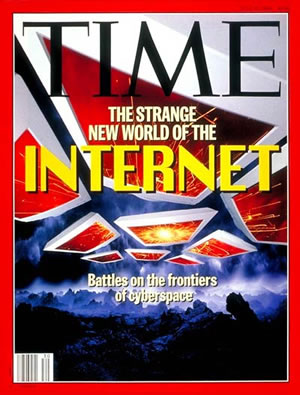
During my 2nd year of university (1994), I took an elective called Introduction to Computers. At that time, the professor was using an overhead for most of his lectures and discused bizzare & forgetable things like C++ and Fortran. However, there was one day that sticks out like a polar bear on a tropical island.
From the back of the lecture hall, I distinctly remember staring at my prof's George Carlin-like, balding head and long ponytail while listening to his deep gruff voice tell us "uh, class, what we're going to talk about today is this thing called the World Wide Web" What and where is this web, I thought? Everyone I knew in school was still going to the library's card catalogues to search for the books they needed.
He proceeded, "on the internet, you can communicate and share information with people from anywhere in the world with this other thing called email. It's the next big thing" I quickly evaluated the lecture notes and decided that the only people I needed to communicate with were my roomates so that I didn't get locked out of the house again.
Then my prof magically connected his new laptop to a projector and navigated around some strange program called "hotmail" while I drifted in an out of sleep.
In 16 years, a lot has changed. Especially consumers. Attached and online at http://www.slideshare.net/MarcBinkley I've summarized the key points of the new consumer decision journey from a multinational study of over 20,000 consumers conducted by McKinsey Quarterly. The full pdf is here http://www.marketingritson.com/documents/theconsumerdecisionjourney.pdf
If this study is as accurate as I believe it is, then you too are changing the way that you shop for & evaluate your media buying. Beside my name you'll find a list of icons where I archive content that relates to marketing and advertising. I've made a promise to myself to continually update the content for my clients which you can share and comment on. If there is anything that you'd like me to research, I'm happy to do it for you. Which leads me to one last question....
Wednesday, July 14, 2010
How to Guide on Social Media

I didn't get it. Facebook for business? What brilliant 140 character message can I Tweet? I couldn't understand how social media works for business. However, according to the Fleishman-Hillard 2010 Digital Influence Index nearly 70% of Canadians have a Facebook account and 85% have heard of Twitter. I reckon it's time I learn.
Give me a ring if you're interested in brainstorming a mixed marketing plan for your business that includes social media. We've got 100,000 loyalty members that can help you jumpstart yours. 403-686-9715 or marc.binkley@calgaryradio.rogers.com
I saw Gary Vanerchuck at a conference. I've attached a link to his presentation notes here http://marcbinkleymarketing.blogspot.com/2010/06/crush-it-by-gary-vanerchuk-presentation.html. Gary made a compelling argument to all the marketers present, that wether we 'get it' or not, doesn't really matter. Social Media is the new marketing language and as such, anyone worth their salt had to learn to speak it. So I decided I should read his book, "why now is the time to CRUSH IT!".
Here are a couple of highlights from his book and below that, a few examples (local ones too) of businesses that are "CRUSHING IT"
- with social media the best marketing strategy ever: CARE, authenticity rules
- choose a medium that suits your DNA ie. video, word blogs, twitter, flickr
- get involved in the community that your passionate about
- Figure out what your passionate about
- Register at godaddy.com and Start a website to display your passion
- start a blog (wordpress, tumblr, google blogs)
- Get a web designer if you can afford it. The better your site is designed, the 'stickier' it is
- If video is your communication vehicle, get a $200 flip cam. HD is best.
- Create a Facebook Fan page (normal facebook accounts only host 5000 friends)
- open a twitter account with your domain name
- open a tubemogul (video) or Ping.FM (blogs) account
- Pump out content
- Deliver your content through Tubemogul or Ping.FM
- Go to Search.twitter for conversations about your passion and reply to them publicly
- go to Blogsearch.google.com for blogs on your passion and leave comments with your name linked back to your homepage
- Search Facebook for content of your passion with "all results", "pages" and "groups". Join as many active groups as possible, but keep track of them
- Repeat Steps 8 - 13 over and over
- do it again
- and again
Here are some great examples of social media
- The Camera Store - www.photorepublik.com (Calgary based international photography community)
- Stuff My Dad Says - http://thingsmydadsaid.com/ (apparently getting a movie deal...remember Julie & Julia?)
- Fishing on The Bow - http://www.bowriverblog.com/
- MEC video contest - http://www.bowriverblog.com/ (social media is about collaboration and creativity)
- Facebook advertising Fan Page - http://www.facebook.com/pages/Advertising/112259292124160?ref=ts
- Youtube Channel Subscriptions - http://www.youtube.com/watch?v=222o-OJXq2A
- Lainey Gossip - http://www.laineygossip.com/ (i'm pretty sure she got a job as a TV host because of this blog)
- Skiing around Calgary - http://skihere.ca/
By the way, I am learning. http://twitter.com/marcbinkley and http://marcbinkleymarketing.blogspot.com/
Tuesday, June 29, 2010
The Most Revolutionary Consumer Product to Date?
XBox Project Natal
I'm in the market for a new game console. I'd never really been a gamer, but I played my fair share of Zaxon, Techmo Bowl and Qbert and growing up. Two years ago, I bought a used Xbox from a friend a and while the sports games are entertaining, I was kind of disappointed with the resolution & image quality of the games which got me thinking about an upgrade.
A few of my friends have PS3s and have been suggesting that I get one so that we can play games online together. I'd heard of this new infrared sensor type game console about a year ago and thought I should check into when it's going to be released before buying anything.
I am absolutely blown away by this....As a marketer, think about the possiblities that exist in our future. This Project Natal and the devices that come after it (location services) will undoubtedly change how future consumers shop....for everything.
I'm in the market for a new game console. I'd never really been a gamer, but I played my fair share of Zaxon, Techmo Bowl and Qbert and growing up. Two years ago, I bought a used Xbox from a friend a and while the sports games are entertaining, I was kind of disappointed with the resolution & image quality of the games which got me thinking about an upgrade.
A few of my friends have PS3s and have been suggesting that I get one so that we can play games online together. I'd heard of this new infrared sensor type game console about a year ago and thought I should check into when it's going to be released before buying anything.
I am absolutely blown away by this....As a marketer, think about the possiblities that exist in our future. This Project Natal and the devices that come after it (location services) will undoubtedly change how future consumers shop....for everything.
Thursday, June 17, 2010
The Art of Marketing Presentation Summary
I had the pleasure of attending an incredible conference monday put on by The Art of....Marketing.
I took detailed notes from all the speakers, which are too lengthy to include on this email but I've posted them by speaker (see below). Where possible, I've linked most of the references to the acutal videos, commercials, photos, websites and articles that the speakers spoke about. It's difficult to summarize an entire days worth of knowledge into one email, but I'd like to try and pass along my take home message from the conference.
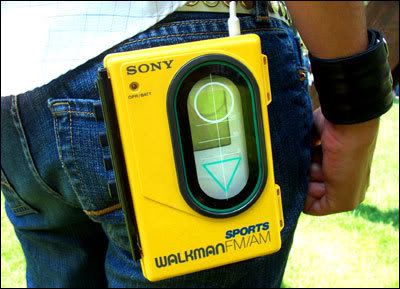
We are living in the future. Brands that don't adapt to this will go extinct and to be competitive, you have to be able to fascinate your audience. I've often thought the best example of this is the Sony Walkman. When I was growing up, the Sony Walkman was the dominant portable music device. Sony owned the market and should have developed the iPOD, but they didn't. In light Sir Ken Robinsons talk, I believe it's because Sony didn't foster an environment of creativity in their organization and didnt learn to communicate with their customers.
This digital revolution isn't over, rather it's just begun. For marketers, the best time to start figuring out this new world is now. Ironically, we can do this by going back to old values. Get involved and contribute to your (online) community. Be respectful of customers...they're interested in more than just the latest sale price or financing offer. We can no longer use mass media exclusively to pound our own agenda. We have to invite conversation and communitcate on the platforms that buyers are using ie. twitter, facebook, Yelp, blogs, review sites. Our brand is no longer what we say it is, its what Google say it is....The truth always wins.
The internet gives each person and business the opportunity to become their own 'channel' with the same distribution scale as any major media outlet. As consumers, our opinions matter and our opinions can be amplified. As marketers, we will not have to make a choice between the old ie. Radio & new, but rather find a way to make the new media work in with with the old.
The bottom line is that marketing today is what it's always been about...communication. More specifically its not just how many we communicate with, but who communicate with.
We adapt to this new world with a few simple principles.
1. Do an intellectual audit of our own companies - what do people know?
2. Promote creativity - how should we interact with customers?
3. Encourage Innovation - how do we apply & reward creative solutions?
4. Get involved - sign up for twitter, facebook. See what it's all about and learn the new marketing language.
5. Learn how to make change - rider direction, motivate the element, shape the path
6. Get excited! - it make you more fascinating, and fascinating wins
Wednesday, June 16, 2010
Leading a Culture of Innovation by Sir Ken Robinson: presentation notes from The Art of Marketing

- Las Vegas has no reason for being there except for one thing...the power of imagination
- Imagination has the power to bring into mind things that aren't there or seem possible
- with imagination, you can anticipate the future and if you can anticipate the future then you can help influence it
- creativity is not the same as imagination
- creativity means you have to cdo something...it's applied imagination
- innovation is simply putting good ideas into practice
- in the 50's & 60's the world was different. If you worked hard, went to school, got a college education, then you would have a job for life. At that time formal education was a guarantee for success [not anymore]
- cultures evolve. For those born around World War I, the world was very different then [as it is now]
- because of imagination we are in a constant state of revolution.
- this revolution is now moving at a faster rate than it has ever moved before
- to make sense of this revolution, we have to think differently about ourselves. Those who are in "their element" love what they do, have a natural knack for something
- being good at something isn't reason enough to do it, it's about having a feeling for it
- most organizations have a narrow vision of the talent around them
- we need to have different strategies to manage and inspire...imaginative possibilities
- Sir Ken's work is to promote higher levels of creativity in an organization and which leads organizations to become systematically innovative
- you can teach people to be more creative
- creativity is the process of having original ideas with value. It's a process, not an event. It's material...people love the material ie. painters love ink, dancers love movement. It's also about critical judgement
- The way that Radio, TV & the Internet transformed culture, social media is now too
- Creative people are everywhere. Anything that involves intelligence can be creative. Creativity can be promoted
- This revolution is not over. Its just begun
- Today, computers have the brain equivalent to that of a cricket. In 10 years, they will have the brain of a 6 month old baby. At some point we'll reach singularity, whereby infomation systems will merge with our own minds
- A study was done to examine our rate of learning. It did so by starting to redefining what a genius is, then test a large group of children early in life and then retest the same group as they grew older.
- if we were to redefine genius from a high IQ score to that of a person with a high capacity of Divergent Thinking (the ability to see multiple options to a single problem) ie. how many uses can you think of for a paperclip? This study found that...
- 98% of 3-5 year olds were considered genius
- by the time these kids were between 8-10 years old, 32% were
- and by the time they were between 13-15 years old, only 10% were
- in a similar study of 25+ year olds, only 2% of adults are considered Genius by this divergent thinking methodology
1. Personal
- people with ideas
- everyone should explore their own talents and invest in them
- Manage and facilitate teams
- find connections between teams and disciplines
- foster a culture of originality
- make it a habit & create the habitat for creativity
- eliminate the creativity spoiler
- in Math Phd defenses, Doctors of Math evaluate a defense based on 2 criteria. 1. creativity 2. Beauty of the solution.
- just as in nature, beauty is an informal test of truth
- intelligence is fantastically diverse
- By most accounts, Death Valley is dead.
- seeds of possibility exist right below the surface and when conditions are right, life abounds.
- However, if conditions are not right, life protects itself hidden away from view
Brand New World by Max Lenderman: presentation notes from the Art of Marketing

- Feel the consumer pulse.
- trust is at an all time low for both public and private sectors. consumers want honesty
- http://www.experiencethemessage.com/
- If the world were made of 100 people...57 would be asian, 21 european, 8 african, 5 north american, 12 would speak mandarin as their 1st language, 7 would speak english as their 1st language, 70 would be non-christrian, 70 don't read, 1 owns a computer
- consumers are price conscious & brand atheistic
- he studied how marketing was done in BRIC nations ie. Brazil, Russia, India, China
1. Experience
- 300 million Indians are in the middle class, soon to be 580million
- most gage their ascention into the middle class with the purchase of a cell phone. [I made it when...]
- there are approximately 7 million new cell phone activations per month in India
- in a market as competitive as that, how do you stay ahead?
- Nokia has created mobile vans to travel out into the rural communities not serviced by TV or Radio. These vans convert into a stage whereby bollywood type performances relay the message about how great cell phones are and what you can do with them. This has become the #1 way for Nokia to communicate its message
- in north amercia, event marketing is huge. Creating branded experiences and events are proven to dramatically increase the purchase decision and word of mouth
- ie. At a time when approval for the war in Iraq is at an all time low and the job description includes the possibility of death, how is it that the army is able to surpass their recruitment objectives? click here to see the virtual army experience . they've got these in malls, amusement parks and mobile locations all around the US
- Confusious say... tell me an i will forget, show me an i may remember, involve me and I will understand
- ie. Camp Jeep Jeep owners have involvement in the brand experience and can share that experience with other users
- anything can be copied except for experiences ie. watches, purses, phones, cars made in china
- experiences are the driver for authenticity ie. apple store, genius bar
- The Apple Store is the fastest growing brand concept store since GAP 20 years ago
- how can it be fake if real people use and recommend their product
- pop up store is a new trend in retail. it's the brand as a living store so you know its real
- Rustam Tariko is a russian Oligarch [big time businessman] who started Russian Standard Vodka
- when it launched, Russians were dying from drinking watered down rubbing alcohol labelled as vodka
- Rustam chose to position his vodka as the highest quality
- then the government decided alcoholism was a problem and banned the liquor industry from advertising
- Rustam wanted to maintain his branding efforts so in response, he opened the Russian Standard Bank.
- Rustam used the same logo, type set, font size and imagery as if he were still advertising vodka
- Russian Standard Bank became the largest bank in Russia
- Other examples of Big Think 7-11 changed to Kwik E Mart for The Simpsons Movie and sold Duff Beer, Bounty opened make a masterpiece stores, Mountain Dew sold game fuel when Halo 3 launched
- in some major cities ie. Sao Paulo, billboard advertising is outlawed. The government felt that the Billboards were to visual pollution that exhaust is to air pollution
- Nedbank did some good with theirs. Their Power to the People billboard campaign had solar panels on top of the billboard which supplied power to the villages & communities below it
- other examples are Charmin's Potty Party Bathroom experience in times square, Tide Loads of Hope Laundry service
Crush it by Gary Vanerchuk: presentation notes from The Art of Marketing
Gary Started WineLibrary.com and wine library TV
- grew to over $60million dollar business. He's 33.
- from '95-'03 he spent over $4.5 million in marketing (annually?)
- from '03 to now he spends about $25,000 (annually?)
- Liquor laws prohibited mass distribution so he started trying to build his own brand
- push marketing - pound the message with traditional media
- Pull Marketing - Social media. it's about caring. You cant buy friends & relationships in online communities. Your content has to be relevant
- Content is King. But Marketing is the Queen that steers the ship
- Big Box marketing approach is rapidly changing
- Those businesses that go back to "small town values" will win. In the small towns as a business owner, you've got to hustle, care and understand that people appreciate the bakers dozen price point
- online relationships are just as real as in person ones
- he has 850,000 twitter followers
- the web is just a baby. it's only been 15 years since we even had such a thing as email. Youtube is only 5 years old
- Virtual Currency: Facebook Credits , Foursquare
- brands will have to care because word of mouth is now on steroids
- the truth is undefeated. doing the right thing is never wrong
- if you're trying to reach consumers, you need to have a facebook fan page
- look at other companies that didn't adapt. Zagat is getting killed by Yelp.
- you need to understand this stuff, play with it, taste it. get on twitter and facebook and experience these new platforms of communication
- respect the customer
- be socially engaged 24/7. get committed to it. seek out and engage conversations. give authenitc non-salesy answers. You don't need to convince people this is important...find the ones who already believe it is.


Tuesday, June 15, 2010
Six Pixels of Separation by Mitch Joel: presentation notes from The Art of Marketing

- After months of sailing Cortez & his crew finally arrived in the new world. His crew asked "how long are we going to stay here for?". Cortez waited for everything to be unloaded from the ships...then burned them
- How do we get forward moving today?
- CTRL, ALT, DEL - time to reboot
- -50% people who clicked on banners since 2007 (comscore)
- under 8% of online users click through. There are over 2 billion online users
- this is not a talk about the future. its about the present. we are living in the future ie. snaptell, red laser, google goggles, yelp
- video is king
- media is becoming untethered ie. iPAD
- the question is not when is the web going to take over traditional media, the question should be WHEN IS THE INTERNET GOING TO BE AS PERVASIVE AS ELECTRICITY?
- Apple sold 2,000,000 iPADS in 60 days
- we live in the most branded generation ever
- there are more grandparents on facebook than high school students (readwriteweb - July 7,2009)
- 88% of canadians are on facebook
- Eckhart Walther from Yahoo! says "it's about doing, sharing, socializing, collaborating & most of all, creating"
- Facebook is like your very own "channel" (Think in terms of CBC, NBC, CNN...it is scaleable)
- 81% of online holiday shoppers read online customer reviews (neilson online - Dec 2008)
- Bazaarvoice proves that if you let people open up, you will win. They have 150 billion impression reviews. The average review is 4.3/5. A negative review converts to sale more effectively than a positive review
- with the internet, people are having real conversations between real people
- these conversations are important because they are distributable and scaleable
- the internet isn't about the number of people you can get your message to, but who sees it
- same with Facebook. It's not the number of 'friends' you have but WHO your friends are that matters
- mass media helps but you need permission for entry. online allows communication with no barrier to entry
- 1/2 of youtube.com's audience is over 34 (marketingvox)
- the average Canadian watches 15+ hours of youtube video per week. The average TV commercial is 30 seconds. The average youtube video is 4 minutes
- Top 3 search engines? 1. Google 2. Youtube 3. Twitter
- Every day on Google, 20% of the searches have never been done before.
- your marketing has to change because of how we connect with one another
- BUT, if your IT consultant says to cancel all your advertising and move everything online...fire him
- the biggest change in this new world is amplification. Consumers have always had the ability to choose to buy or not and tell their friends if they liked a product or service or not. The word of mouth is now amplified
- Your brand is no longer what you say it is. It's what Google says it is.
- Bounce Rates are important metrics to measure your website 'stickyness' if the bounce rate is really fast it's "i came, I puked, I left"
- identify the pages on your site that have the most traffic and evaluate how the user interface is
- the best value of a brand is in its community
- Digital Darwinism 'we were on facebook & twitter, but it doesn't work'. The problem is because you're not engaging. What are you doing to add value?
- you need to build a community before you launch a product
1. accept it
2. it goes with. not instead of traditional media
3. dont write cheques with digital media you cant cash. it's about honesty
4. open up. let the community share, create
5. attitude, not age related
6. Ask Why? not what. It's not what are we doing, it's why is this better alighned with our business objectives
- if you have the right message, and you tell the right people, your story will spread....check this free hugs video out, over 59 million views and counting
Fascinate by Sally Hogshead: presentation notes from the Art of Marketing
- When competition increases, the more essential fascination becomes. Since most often, the most fascinating option wins
- 100 years ago we had 20 minute attention spans. Today we have an attention span of 9 seconds...which is that of a goldfish
- Sally's Website
- free book download here
- So how do unusual things break through the clutter?
- fascinating things don't speak to everybody. The create an immediate reaction and are polarizing
- there are 7 triggers to fascination 1. Power 2. Lust 3. Mystique 4. Prestige 5. Alarm 6. Vice 7. Trust
- imagine these 7 triggers are chemicals in a chemistry set.
- Every fascinating brand has their own unique potion
- Fedex - high on Alarm & Trust
- Kraft foods - high on Lust & Trust
- Rachael Ray - high on Lust & Trust
- Angelina Jolie - high on Lust, Mystique, Alarm, Vice
- KMart - low levels for all triggers
- Fascination is different from marketing. It's irrational, instintive, innate, irrestistable.
- you don't control fascination, it controls you ie. Jagermeister is one of the fastest growing brands of all time and yet has a very low budget, but an extremely high fascination level
- In relation to Facebook, they did a survey to find out what status updates are fascinating...and get passed on...they end up being the ones with high amounts of trigger elements
- In your own marketing, messages are fascinating are like facebook status updates...they're more likely to be passed on. This is important since it's not just about trying to reach your network, but your network's network.
- In otherwords, its not about how many people you reach, but who.
- when you become your most fascinating, you are at your most inspiring
- take Sally's test to find your {F}Score.

I got an {F}Score high in Lust & Mystique, low on Alarm. If you know me, I 'd love to hear your opinion if this is accurate
Switch Presentation Notes by Chip Heath @ The Art of Marketing

- here is a link to another presentation by Chip
http://www.youtube.com/watch?v=Bs9NbxJHV-w
The following are the notes I took from Chip's presentation
- how do we change things when change is hard?
- there is an struggle between emotional and analytical motivators that can be explained by the elephant and rider analogy http://www.anecdote.com.au/archives/2010/01/the_mahout_the.html
- when it comes to change, we need to align the rider (analytical) and the elephant (emotional)
- to make change There are 3 components 1. we must give direction to the rider. 2. create motivation for the elephant. 3. Shape the Path these two will travel
Rider Direction
- The rider loves to analyze problems, however focusing on non-productive problems and paralyze the rider & elephant. While the analysis may be valid, it can be T.B.U...true, but useless
- the key to productive analysis is to find bright spots in any situation, analyze why those bright spots exist and replicate the strategies that let to the bright spot
- ie. http://www.fastcompany.com/magazine/41/sternin.html
Motivate the Elephant
- how do you make people care about your product/issue?
- ie. Dont mess with Texas campaign.
- road litter in Texas was primarily caused by 18-30 year old truck drivers that the state affectionately called "Bubba"
- the don't mess with Texas campaign was designed to speak to Bubba using the celebrities he recognized & respected as Texans such as Stevie Ray Vaughan, Willie Nelson etc
- in the 1st year aluminum can litter was down 25% and in 5 years it was down by 75%
- http://en.wikipedia.org/wiki/Don%27t_Mess_with_Texas
- to make change you need to grow the elephant
Shape the Path
- focus on people rather than the situation. In other words, if you tweak the environment the people operate in, you're more likely to effect change than by expecting people to adapt to your environment
- ie. Amazon - "buy now with 1 Click" is a registered trademark.
- ie. Playtex - most women wear the wrong bra size. Playtex put ads in magazines like "O" with encouragement that women can calculate their right bra size in 2 easy steps. Most people now don't have measuring tapes handy so the ad included a tear away measuring tape
- 100 calorie food packs - available for calorie counting consumers everywhere
Thursday, June 10, 2010
7 Insights into the Consumer Mind

After seeing my favorite commercial last night during the hockey game http://www.youtube.com/watch?v=owGykVbfgUE&feature=related I wondered why am I so affected by this series of commercials? More importantly, why have I switched my soap brand loyalty and started buying Old Spice?
Perhaps this article can shed some light on these questions and help you make a bigger impact with prospective & existing consumers.
http://www.businessknowhow.com/marketing/neuromarketing.htm
In traditional marketing, we are told ... "follow the proven formula of compelling headlines, benefits, satisfaction guarantee and a call to action, and your sales will skyrocket." Yet, even top marketers can attest that successful campaigns are a "hit or miss" proposition to find those that generate big sales
"Our unconscious mind -- not our conscious mind -- drives how we respond to ads, brands and products and, ultimately, drives all our buying decisions. Customers don't really know why they buy what they buy, which is why traditional market research fall short."
According to neuroscientists, there are 3 main parts to the brain, each functioning as a brain unto itself. These "three brains" - nestled inside one another -- are as follows.
The "Human" ("New," or outer-most) Brain: Most evolved part of the brain known as the cortex. Responsible for logic, learning, language, conscious thoughts and our personalities.
The "Mammalian" (Middle) Brain: Also known as the limbic system. Deals with our emotions, moods, memory and hormones.
The "Reptilian" (Old) Brain: Also known as the R Complex controls our basic survival functions, such as hunger, breathing, flight-or-fight reactions and staying out of harm's way.
The reptilian, or "old," brain drives your customers' buying decision
To strengthen your brand, loyalty and sales, you must understand your customers' "reptilian hot buttons." A "cortex" message -- such as "Buy my product because it is 20% cheaper" -- doesn't buy customer loyalty. It all comes down to who triggers the first reptilian reaction. That's why Coke, after all these years, continues to dominate the market.
The "Reptilian Brain" and Profits: 7 Critical Insights You Must Know About How and Why Your Customer Buys
1. The old brain is driven by emotions
The more senses you trigger and associate with your products/services, the more you will appeal to your customers' emotions and influence their buying behavior.
2. The old brain "decides" on the basis of the gain vs. pain tradeoff
Marketing guru, Seth Godin illustrates through his Joy/Cash Curve that high value purchases often trigger increasing amounts of buying pain. His solution: add more joy and pleasure to the buying process, such as he did in his work with Lexus. According to Godin, when you make buying pleasurable, you actually reset the customer's "value meter." How are you adding more joy to your buying process?
3. The old brain is highly influenced by beginnings and endings.
In marketing, for your message to be accepted, it is critical to leave a strong first impression -- like a compelling story, a big smile, etc. Also, if a customer has a pleasant or unpleasant experience with your product or company, that most recent experience will influence future purchases more than all other experiences combined. What impression are you leaving with your prospects in the first few seconds or words? How has your last customer contact enhanced or jeopardized repeat sales?
4. The old brain is visually oriented and responds rapidly to images
Enhance and deliver your core marketing message visually -- eg., the design of your product, images in an ad, external packaging, etc. Where can you visually strengthen your brand and emotional connection with customers?
5. The old brain perceives the "pain of buying" in relative, not absolute, terms.
From various posts by Roger Dooley (Neurosciencemarketing.com), key strategies include:
Emphasize "sales" prices (which does not activate pain in the old brain)
Utilize "package" pricing over pricing of individual components (the latter shows greater "pain activity in the old brain)
Series of small "bite-size' investments in place of one large investment (Netflix)
6. The old brain understands only what is tangible, physical and concrete.
To speak to the old brain, you must use tangible "benefits" -- ie., what a customer will see, feel, hear, taste or smell as a result. Eg., a promise of "greater happiness" is gibberish to the old brain. Instead, tell your prospect how he/she will wake up every morning with a smile. Or use metaphors (such as referring to your service as the "Cadillac" offering) to make your benefits more tangible.
7. The old brain's control over buying decisions varies from culture to culture.
Adapt your marketing communications to each culture and what part of their brain drives buying decisions. Use emotional appeal with Americans; use logic with European cultures
Monday, May 10, 2010
Segmentation Marketing

Lately it seems a growing number of clients have been talking about switching to a 'segmentation' based marketing model. The simplest way that I can explain this concept is with an example.
JACK FM has an average weekly audience of 346,000 Adults listening over the age of 12. This know as our CUME or put another way, JACK's market. However, as a marketer, I'd like to break down our audience into the groups of people who are most important to my business. These groups, or segments, have similar needs and can be identified by on
1. Demographics (age, family size, life cycle, occupation),
2. Geography (states, regions, countries),
3. Behavior (product knowledge, usage, attitudes, responses) and/or
4. Psychographic (lifestyle, values, personality).
Each segment has unique set of needs from each other and each should be marketed to differently. If JACK FM was trying to sell a product or service, I would determine which segments are most profitable, choose a only a few that I want to attract as customers, then develop a marketing strategy to communicate with that particular segment.
Below is a very short list of some segments within our audience. This data is sourced from BBM-RTS Calgary Fall ‘09 Base: P12+, Tune into JACK FM. If you'd like me to get some research done on your preferred segment, please feel free to call or email me at 403-686-9715 or marc.binkley@calgaryradio.rogers.com
Demographics - age, family size, occupation
Child born/ adopted: 14,933 listeners
Between 35-54: 117,640 listeners
Employed as Owners,Managers or Professionals: 114,180 listeners
Behaviour - product knowledge, usage & attitudes
Dine at casual/ family dining restaurants 1+ times/ month: 25% more likely than the average Calgarian (24,789 listeners)
Visited a national/ provincial park 7+ times/ year: 21% more likely than the average Calgarian (13,727 listeners)
likely to buy/ lease a vehicle in the next 12 months: 17% more likely than the average Calgarian (35,996 listeners)
Psychographic - lifestyle & values
Spent $3,000+ on last vacation: 28,015 listeners
Occasionally/ regularly cycle (mountain/ road biking): 84,055 listeners
Occasionally/ regularly golf: 75,547 listeners
http://en.wikipedia.org/wiki/Market_segmentation
A market segment is a sub-set of a market made up of people or organizations sharing one or more characteristics that cause them to demand similar product and/or services based on qualities of those products such as price or function.
The process of segmentation is distinct from targeting (choosing which segments to address) and positioning (designing an appropriate marketing mix for each segment). The overall intent is to identify groups of similar customers and potential customers; to prioritize the groups to address; to understand their behavior; and to respond with appropriate marketing strategies that satisfy the different preferences of each chosen segment. Revenues are thus improved.
Market segmentation is the act of identifying and profiling distinct groups of buyers who might require separate products and/or marketing mixes
It is the process of splitting customers into different groups or segments, within which customers with similar characteristics have similar needs. Benefits: 1) marketers are in a better position to locate and compare marketing opportunities 2) marketers can easily and effectively formulate and implement marketing programs 3) marketers can make finer adjustments in their products and marketing communications. 4) Competitive strengths and weaknesses can be assessed effectively 5) Segmentation leads to more effective utilisation of marketing resources
Once a market segment has been identified (via segmentation), and targeted (in which the viability of servicing the market intended), the segment is then subject to positioning. Positioning involves ascertaining how a product or a company is perceived in the minds of consumers.This part of the segmentation process consists of drawing up a perceptual map, which highlights rival goods within one's industry according to perceived quality and price. After the perceptual map has been devised, a firm would consider the marketing communications mix best suited to the product in question.
http://www.marketingteacher.com/Lessons/lesson_segmentation.htm
Segmentation is essentially the identification of subsets of buyers within a market that share similar needs and demonstrate similar buyer behavior. The world is made up of billions of buyers with their own sets of needs and behavior. Segmentation aims to match groups of purchasers with the same set of needs and buyer behavior. Such a group is known as a 'segment'. Think of your market as an orange, with a series of connected but distinctive segments, each with their own profile.
http://marketing.about.com/cs/sbmarketing/a/smbizmrktseg.htm
A business must analyze the needs and wants of different market segments before determining their own niche. To be effective in market segmentation keep the following things in mind:
1. Segments or target markets should be accessible to the business
2. Each segmented group must be large enough to provide a solid customer base.
3. Each segmented group requires a separate marketing plan.
Subscribe to:
Posts (Atom)